
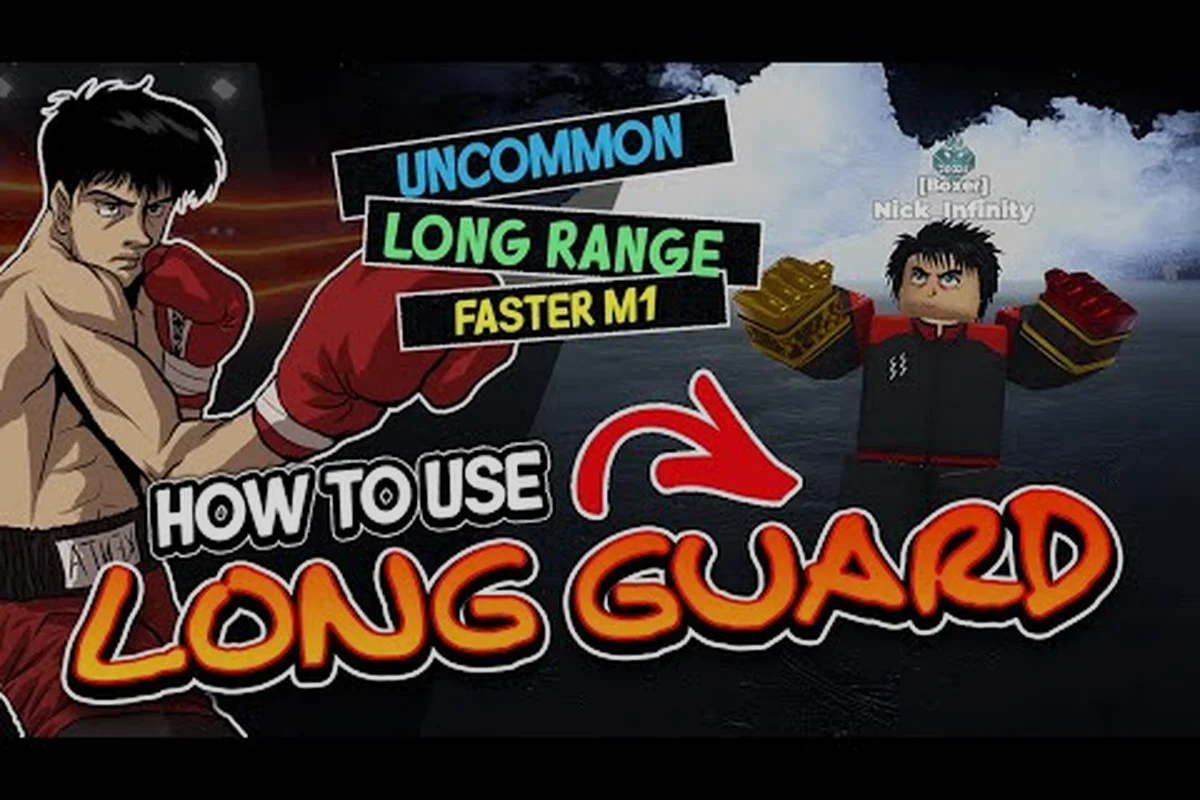
The Long Guard style UBG sits in a strange pocket of the meta: it is not flashy, it does not top damage charts, and it rarely appears in highlight reels. What it does offer is a defensive backbone that punishes overextension, and that makes it one of the most reliable Uncommon picks for players who would rather control distance than trade blows. Understanding how this style interacts with buffs and other fighting styles changes how you approach every round.
Keeping Opponents at Reach Range With the Extended Guard
The Long Guard style UBG is built around one central idea: keep the opponent at the end of your reach while staying safe behind an extended guard. According to community data from the Untitled Boxing Game wiki, Long Guard is classified as an Uncommon defensive style with extended reach and a counter-friendly moveset. That classification matters because it tells you exactly where the style wins and where it struggles.
How the Extended Reach Changes Neutral
The extended reach on the Long Guard style UBG means your jab and straight punches connect from a distance where most other styles whiff. This creates a frustrating dynamic for aggressive players who want to close the gap, because they must eat damage on the way in. The counter-friendly moveset then punishes them for committing to that approach.
| Attribute | Long Guard Style UBG | Typical Aggressive Style |
|---|---|---|
| Effective Range | Extended | Short to Mid |
| Guard Stability | High | Medium |
| Counter Potential | Strong | Situational |
| Raw Damage Output | Moderate | High |
| Mobility While Guarding | Good | Limited |
The table above shows why the Long Guard style UBG feels so different from something like the Slugger style UBG, which trades range and safety for raw knockout power. When you understand this trade-off, you can start building a game plan around making opponents play your game instead of theirs.
Counter-Friendly Moveset Breakdown
The counter-friendly nature of the Long Guard style UBG comes from how its animations recover quickly after blocking. Because your guard returns to neutral faster than many other styles, you can slip in a counter jab before the opponent recovers from their whiffed swing. This is the core loop that makes the style work at higher levels of play.
Players who master this timing report that the Long Guard style UBG feels almost unfair against opponents who rely on big, telegraphed swings. The key is patience: you are not trying to out-damage anyone, you are trying to make them miss and then make them pay for missing.
Buff Synergy for the Long Guard Style UBG
Buffs in UBG can dramatically shift how a style performs, and the Long Guard style UBG benefits from a specific subset of them. Because the style already has strong defensive stats, stacking defensive buffs can push it into territory where opponents simply cannot break your guard without taking significant counter damage.
Defensive Buff Priority
When you are running the Long Guard style UBG, your buff priority should focus on anything that enhances guard durability, counter damage, or movement speed while guarding. Damage buffs are not useless, but they are less efficient here than they would be on a style like the Iron Fist style UBG, which is built around landing heavy single hits.
| Buff Type | Synergy with Long Guard | Reason |
|---|---|---|
| Guard Durability | Excellent | Extends the window for safe counters |
| Counter Damage | Excellent | Amplifies the style's core strength |
| Movement Speed | Good | Helps maintain optimal spacing |
| Raw Damage | Moderate | Useful but not the primary win condition |
| Stamina Recovery | Good | Keeps your guard up longer in extended exchanges |
The synergy between guard durability and counter damage is what makes the Long Guard style UBG feel like a completely different style when properly buffed. You go from being a defensive nuisance to a legitimate threat that opponents must respect.
Anti-Synergy Buffs to Avoid
Not every buff helps the Long Guard style UBG. Some buffs actively work against the style's game plan, either by encouraging you to play more aggressively than you should or by reducing the effectiveness of your defensive tools. For example, a buff that shortens your guard recovery frames might sound useful on paper, but in practice it can bait you into attempting riskier punishes instead of holding your range. Likewise, a buff that converts blocked chip damage into health loss for the opponent can push you to fish for trades, which is the exact opposite of what the Long Guard style UBG wants to do against rushdown matchups like the Ghost style UBG.
Buffs that increase dash speed or encourage rushdown play can tempt you into abandoning your range advantage, which is exactly what aggressive opponents want. Similarly, buffs that trade guard stability for damage output undermine the core identity of the Long Guard style UBG and should be avoided in most builds.
Comparing the Long Guard Style UBG to Other Fighting Styles
To understand where the Long Guard style UBG fits in the broader meta, you need to see how it stacks up against other popular picks. The Wolf style UBG guide community often notes that Wolf is a more balanced option, while the Ghost style UBG leans into evasion rather than blocking.
Long Guard vs. Wolf Style
The Wolf style UBG guide discussions frequently highlight Wolf's versatility: it has decent range, decent damage, and decent defense. The Long Guard style UBG sacrifices some of that versatility for a stronger defensive identity. Where Wolf can adapt to different matchups, Long Guard commits fully to the defensive counter-puncher role.
| Category | Long Guard Style UBG | Wolf Style UBG |
|---|---|---|
| Playstyle | Defensive Counter-Puncher | Balanced All-Rounder |
| Range | Extended | Medium |
| Best Matchup | Aggressive Rushdown | Mirror or Balanced |
| Weakest Matchup | Patient Zoners | Specialized Styles |
| Skill Floor | Low | Low |
| Skill Ceiling | High | Medium |
This comparison matters because it helps you decide whether the Long Guard style UBG fits your preferred way of playing. If you like adapting to each opponent, Wolf might feel better. If you want to master one specific defensive game plan, Long Guard is the stronger choice.
Long Guard vs. Ghost and Hawk Styles
The Ghost style UBG takes a completely different approach to defense: instead of blocking, it focuses on evasion and making opponents miss through movement. The Long Guard style UBG blocks and counters, while Ghost slips and punishes. Both are defensive, but they demand different skills.
The Hawk style UBG, meanwhile, is often discussed alongside these styles because it also emphasizes movement and positioning. However, the real boxer inspired styles breakdown shows that Hawk leans more toward speed and angle control than pure defensive countering. Understanding these distinctions helps you pick the style that matches your instincts.
Practical Matchup Strategy for the Long Guard Style UBG
Knowing the theory behind the Long Guard style UBG is one thing; applying it in actual matches is another. The style rewards a specific mindset: you are the wall, and the opponent is the wave. Your job is to let them crash against you and then punish the aftermath.
Winning the Neutral Game
The neutral game with the Long Guard style UBG revolves around maintaining a specific distance: close enough that your extended reach can tag the opponent, but far enough that their shorter-range attacks whiff. This is a narrow window, and mastering it takes practice.
Distance Management is the single most important skill for this style. When you drift too close, aggressive styles can overwhelm your guard with pressure. When you drift too far, you give up your ability to counter effectively. The sweet spot is roughly at the tip of your jab range, where you can hit them but they cannot hit you.
Punishing Aggressive Opponents
Aggressive opponents are the Long Guard style UBG's favorite matchup. These players want to close distance and overwhelm you with pressure, but every step they take toward you is a step into your counter range. The key is to stay calm and let them make the first mistake.
Counter Timing against aggressive players comes down to recognizing their approach patterns. Most rushdown players use the same two or three entries: dash-in jab, dash-in heavy, or jump-in. Once you recognize which entry they prefer, you can pre-position your counter to meet them as they arrive.
Dealing with Patient Opponents
Patient opponents are the Long Guard style UBG's hardest matchup. These players refuse to overextend, which means your counter-friendly moveset has nothing to punish. The core issue is that Long Guard's kit is built around reactive defense — its extended reach and counter windows thrive when opponents commit to forward pressure. A patient opponent who sits just outside your jab range and waits for you to whiff turns your greatest strength into a liability, because every missed strike leaves you in recovery frames that a disciplined player can exploit. Against these opponents, you need to become the aggressor, but carefully.
The next style in untitled boxing game discussion covers how defensive styles sometimes need to shift gears, and the Long Guard style UBG is no exception. Use your extended reach to poke at their guard from safety, forcing them to either respond or slowly lose the round on points.
Advanced Techniques and Buff Stacking for the Long Guard Style UBG
Once you have the fundamentals down, the Long Guard style UBG opens up some advanced techniques that separate good players from great ones. These techniques revolve around buff stacking and understanding how different buffs interact with the style's unique properties.
The Counter Damage Stack
One of the most effective builds for the Long Guard style UBG is the counter damage stack. This build focuses entirely on amplifying the damage of your counter hits, turning your defensive style into a legitimate knockout threat. The core loop is simple: bait an attack with your extended guard window, absorb the hit without breaking stance, then immediately punish with a counter that now hits 40–60% harder thanks to stacked buffs. In practice, this means a single well-timed counter against an aggressive wolf style UBG rushdown can erase a third of their health bar, forcing them to abandon their pressure game and fight on your terms. Against ghost style UBG players who rely on feints and teleport mix-ups, the counter damage stack punishes every failed trick with fight-ending damage, making them hesitate before committing to their usual offense.
| Build Component | Purpose | Expected Impact |
|---|---|---|
| Counter Damage Buff | Amplify counter hit damage | High |
| Guard Durability Buff | Extend safe blocking window | High |
| Stamina Recovery Buff | Maintain guard uptime | Medium |
| Movement Speed Buff | Reposition between counters | Medium |
This build works because it leans entirely into what the Long Guard style UBG already does well. You are not trying to patch weaknesses; you are amplifying strengths until they become overwhelming. The Guard Durability Buff is the silent engine here: by extending the safe blocking window, it gives you more frames to confirm whether an incoming wolf style UBG rushdown string has ended or is still chaining, meaning you commit to the counter only when the punish is guaranteed. Meanwhile, the Stamina Recovery Buff keeps your guard from cracking during extended ghost style UBG feint sequences, so you can hold stance through three or four teleport mix-ups and still have the meter to fire back. The result is a compounding loop—every blocked hit feeds a harder counter, and every harder counter forces your opponent to swing less, which in turn makes their remaining attacks easier to read and punish.
The Spacing Control Build
Rather than fishing for the Long Guard style UBG's signature counter windows, this variant leans on its extended reach and defensive posture to dictate engagement range from round start. Stacking movement speed lets you backstep just outside an opponent's preferred initiate distance, while stamina buffs let you hold the guard stance longer without burning out — which matters because a stamina-broken guard in UBG leaves you open to a free combo. The result is a slow, deliberate pressure: opponents who try to close the gap eat a poke or a whiff punish, and opponents who hesitate give you the space to reset neutral on your own terms.
The best combo style ubg tier discussions often note that defensive styles like the Long Guard style UBG can struggle to close out rounds against opponents who refuse to engage. The spacing control build addresses this by making it nearly impossible for opponents to escape your extended reach without taking chip damage.
Frequently Asked Questions
Is the Long Guard style UBG good for beginners?
The Long Guard style UBG is an excellent beginner pick because its defensive nature forgives mistakes. New players can focus on learning spacing and timing without worrying about complex offensive combos. The style teaches fundamentals that transfer to every other fighting style in the game.
How does the Long Guard style UBG compare to the Slugger style UBG?
The Slugger style UBG is a heavy-hitting offensive style that sacrifices defense for knockout power. The Long Guard style UBG takes the opposite approach, trading damage for safety and counter potential. Which one is better depends entirely on whether you prefer pressuring opponents or punishing their mistakes.
What buffs should I use with the Long Guard style UBG?
Prioritize guard durability and counter damage buffs, as these amplify the style's core strengths. Movement speed and stamina recovery are solid secondary options. Avoid buffs that encourage aggressive rushdown play, since they work against the style's defensive identity.
Can the Long Guard style UBG beat the Iron Fist style UBG?
The matchup between the Long Guard style UBG and the Iron Fist style UBG favors the Long Guard player who stays patient. Iron Fist hits incredibly hard but needs to close distance to land those hits. The Long Guard's extended reach and counter-friendly moveset punish every approach attempt.
Is the Long Guard style UBG worth mastering long-term?
The Long Guard style UBG has a high skill ceiling that rewards dedicated players. While it may not top damage charts, a master of this style can frustrate and dismantle opponents who rely on aggression. The skills you learn here, especially spacing and counter timing, carry over to every other style in UBG.