
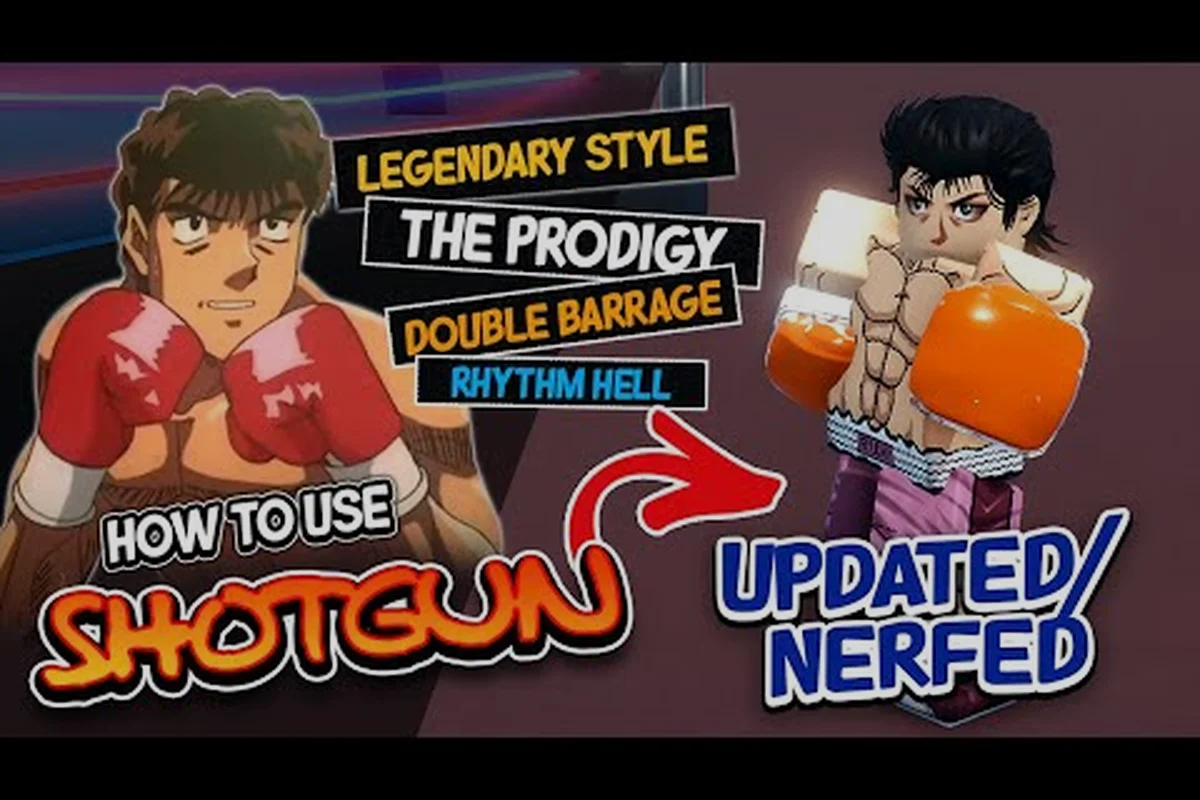
The ubg shotgun style origin points to a Legendary rapid-fire punching kit built around overwhelming flurry pressure rather than single heavy hits. Understanding where this style comes from matters because it determines how you read your opponent's rhythm, manage stamina trades, and punish whiffed bursts in ranked matches. The same design logic also explains why Slugger, Hitman, and Hands Low feel like distinct boxer archetypes instead of cosmetic reskins.
What Defines the Shotgun's Rapid-Fire Flurry
The Shotgun style in Untitled Boxing Game is classified as a Legendary rarity kit, and its defining trait is a rapid-fire flurry that chains multiple fast punches into a single pressure sequence. According to the community wiki entry for fighting styles, Shotgun delivers overwhelming flurries that can shred an opponent's guard if they try to block the entire string. The origin concept draws from real boxing archetypes that prioritize hand speed and combination volume over knockout power, which is why the style rewards players who stay in mid-range and commit to multi-hit exchanges.
How the Flurry Proc Works
The core mechanic behind Shotgun is its flurry proc condition, which triggers when you land the initial jab or cross in a specific sequence. Once the proc activates, the follow-up punches come out faster than normal and carry reduced endlag, allowing you to chain into a guard-break setup or a dash-cancel reset. Community testing suggests that the flurry window lasts roughly 1.2 to 1.5 seconds, although exact timing may vary by server latency and platform version.
| Attribute | Shotgun Style Value | Notes |
|---|---|---|
| Rarity | Legendary | Low drop chance from style rolls |
| Core Strength | Rapid-fire flurry | Chains fast punches into pressure |
| Best Range | Mid-range | Avoids clinch and long-range counters |
| Stamina Drain | High per flurry | Requires careful resource management |
| Counterplay | Sidestep + single counter | Punishes overcommitted bursts |
The style's biggest weakness is stamina bleed, because each flurry consumes a large chunk of your meter even when most punches land cleanly. Players who spam the full chain without confirming hits often find themselves stamina-broken and vulnerable to a counter combo. The best Shotgun users treat the flurry as a punish tool rather than a neutral opener, waiting for the opponent to whiff before committing to the full sequence.
Origin Parallels in Boxing and Anime
The ubg shotgun style origin draws from the same design space as Hajime no Ippo's depiction of high-volume infighters who overwhelm opponents with punch counts. While Shotgun is not a direct copy of any single anime character, its emphasis on rapid combinations mirrors the way Ippo Makunouchi pressures opponents with relentless body-head sequences. The untitled boxing game hajime no ippo references article breaks down how several UBG styles borrow structural ideas from the anime's fight choreography without copying moves one-to-one.
Slugger Style Origin and Power Archetype
The ubg slugger style origin traces back to the classic one-punch knockout artist archetype, where every committed swing carries massive damage potential at the cost of speed and recovery. Slugger is not about volume; it is about timing a single clean shot that either ends the round or forces the opponent into a defensive shell. This design philosophy comes from real boxers like George Foreman and Deontay Wilder, who built entire game plans around landing one fight-changing punch.
Slugger vs Shotgun Trade-Offs
Where Shotgun wins through accumulation, Slugger wins through burst damage. A single Slugger counter can erase the progress of three or four Shotgun flurries, which creates a natural rock-paper-scissors dynamic between the two styles. The table below compares their core attributes side by side.
| Comparison Point | Shotgun | Slugger |
|---|---|---|
| Damage per hit | Low to medium | High to massive |
| Combo potential | Very high | Low |
| Stamina efficiency | Poor on long chains | Moderate per swing |
| Punish window | Short after flurry | Long after whiff |
| Ideal matchup | Defensive turtles | Aggressive flurry users |
The Slugger counter window is the single most important concept to master, because every missed heavy punch leaves you open for a full combo from faster styles. Players who understand the ubg slugger style origin know that the style is not about throwing first; it is about baiting a commitment and then answering with a single decisive shot. This patience-based approach contrasts sharply with Shotgun's proactive pressure, which is why the two styles attract very different player personalities.
Community Perception and Ranking
Community tier lists generally place Slugger in the A-tier for ranked play, because its damage output can swing matches even when the player loses most exchanges. However, the style struggles against counter-focused kits that can punish its long recovery frames. The next style in untitled boxing game guide covers how reworked styles and counter mechanics interact with power archetypes like Slugger, which is useful context if you are deciding whether to invest in this kit.
Hitman Style Origin and the Boxer Archetype
The ubg hitman style origin boxer connection is one of the most direct anime references in the game, because the style is modeled on Ryo Mashiba from Hajime no Ippo. Mashiba's signature flicker jab and long-range punching style translate directly into Hitman's extended reach and awkward angles. The style rewards players who can maintain distance and use range advantage to land punches from positions where shorter styles cannot respond.
According to the Untitled Boxing Games Wiki, the shotgun style origin is categorized among the game's fighting styles with distinct mechanical properties that define its close-range burst behavior.
Mashiba's Flicker Jab Translation
The flicker jab is the defining tool of the Hitman style, and it works by extending the lead hand in a whipping motion that catches opponents off guard. In UBG, this translates to a long-range jab with unusual hitbox properties that can interrupt incoming approaches. The style's origin as a Mashiba reference means it also carries a psychological pressure component, because opponents often hesitate to enter range against a kit that punishes forward movement so effectively.
| Hitman Attribute | In-Game Effect | Origin Reference |
|---|---|---|
| Flicker jab | Long-range interrupt | Mashiba's signature punch |
| Extended reach | Hits from outside normal range | Mashiba's height and arm length |
| Angle pressure | Awkward punch trajectories | Mashiba's unorthodox stance |
| Counter emphasis | Punishes aggressive entries | Mashiba's defensive counters |
The style's biggest weakness is inside pressure, because once an opponent closes the distance, Hitman's long-range tools become much harder to land cleanly. This is why the best Hitman players constantly manage spacing and use backstep resets to keep opponents at the edge of their effective range. The untitled boxing game makunouchi ippo article explores how the game translates anime character traits into mechanical strengths and weaknesses, which helps explain why Hitman feels so distinct from other styles.
Matchup Dynamics Against Other Styles
Hitman performs exceptionally well against Slugger, because the long-range jab can interrupt heavy swings before they land. Against Shotgun, the matchup is more even, because Shotgun's flurry can close distance quickly and overwhelm Hitman's single-hit pokes. Understanding these matchup dynamics is essential for ranked play, because style selection often determines the outcome before the first punch is thrown.
Hands Low Style Origin and Defensive Philosophy
The ubg hands low style origin comes from the counter-puncher tradition, where fighters keep their hands at waist level to bait opponents into throwing first. This defensive philosophy is embodied by boxers like Prince Naseem Hamed and Roy Jones Jr., who used lowered guards as a psychological weapon rather than a defensive liability. In UBG, Hands Low translates this into a style that rewards slip timing and counter windows over proactive blocking.
The Bait-and-Counter Loop
The core loop of Hands Low is simple: lower your guard, bait an attack, slip the incoming punch, and answer with a counter combo. This loop requires precise timing and matchup knowledge, because slipping the wrong punch leaves you exposed to a follow-up. The style's slip frames are slightly longer than other defensive options, which gives experienced players a larger window to trigger counter damage.
| Hands Low Mechanic | Effect | Skill Requirement |
|---|---|---|
| Lowered guard | Bait opponents into attacking | High game sense |
| Extended slip frames | Larger counter window | Precise timing |
| Counter damage bonus | Extra damage on successful slips | Matchup knowledge |
| Psychological pressure | Forces opponents to hesitate | Consistent execution |
The style's counter damage bonus is the main reason players invest time in learning it, because a well-timed slip can turn a losing exchange into a round-winning combo. However, the lowered guard also means that missed slips are extremely punishing, which is why Hands Low is considered a high-risk, high-reward kit. The trickster style ubg guide covers how other counter-oriented styles compare to Hands Low in terms of risk profile and execution difficulty.
Hands Low in the Current Meta
Community reports suggest that Hands Low has risen in popularity as players have become more comfortable with slip timing and counter confirms. The style rewards players who study opponent patterns and punish predictable aggression, which makes it a strong choice against Shotgun spammers who rely on repetitive flurry sequences. However, the style struggles against patient players who refuse to throw first, because the bait-and-counter loop requires the opponent to commit to an attack.
Best Hajime no Ippo Characters in UBG and Style Mapping
The best hajime no ippo characters in ubg are not direct playable characters but rather style inspirations that shape how each kit feels and plays. The game maps anime archetypes onto mechanical identities, which is why Hitman feels like Mashiba, Slugger feels like a generic power puncher, and Shotgun feels like Ippo's high-volume pressure. Understanding these mappings helps players choose a style that matches their preferred anime character's fighting philosophy.
Style-to-Character Mapping Table
| UBG Style | Hajime no Ippo Inspiration | Core Trait |
|---|---|---|
| Hitman | Ryo Mashiba | Long-range flicker jab |
| Shotgun | Ippo Makunouchi | Rapid-fire pressure |
| Slugger | Generic power puncher | One-punch knockout |
| Hands Low | Counter-puncher archetype | Bait-and-counter |
| Turtle | Defensive specialist | Guard and punish |
The mapping is not always one-to-one, because the game blends multiple influences into each style. For example, Shotgun borrows Ippo's volume punching but also incorporates elements of infighter pressure that appear across multiple anime characters. The ubg turtle style origin article explores how defensive archetypes map to anime and fighting game characters, which rounds out the full picture of style origins in UBG.
Why Anime Origins Matter for Gameplay
Understanding the anime origins of each style matters because it gives you a mental model for how the style is supposed to play. If you know that Hitman is based on Mashiba, you instinctively understand that the style wants to maintain distance and punish entries. If you know that Shotgun is based on Ippo's pressure, you understand that the style wants to close distance and overwhelm with volume. This mental model accelerates the learning curve and helps you make better decisions in the heat of a match.
Frequently Asked Questions
What is the ubg shotgun style origin?
The ubg shotgun style origin is a Legendary rapid-fire flurry kit inspired by high-volume pressure fighters like Ippo Makunouchi. It emphasizes chaining fast punches into overwhelming sequences rather than landing single heavy hits, which makes it ideal for players who prefer aggressive mid-range pressure over patient counter-punching.
How does the Shotgun flurry proc work?
The Shotgun flurry proc triggers when you land the initial jab or cross in a specific sequence, causing follow-up punches to come out faster with reduced endlag. The window lasts roughly 1.2 to 1.5 seconds based on community testing, and it allows you to chain into guard-break setups or dash-cancel resets.
Is Slugger better than Shotgun in ranked play?
Slugger and Shotgun serve different roles, so neither is strictly better. Slugger wins through burst damage and one-punch knockouts, while Shotgun wins through accumulation and pressure. Community tier lists generally place both in A-tier, but Slugger struggles against counter-focused kits while Shotgun struggles against patient players who punish flurry spam.
Which UBG style is based on Mashiba?
The Hitman style is based on Ryo Mashiba from Hajime no Ippo, specifically his flicker jab and long-range punching style. The style translates Mashiba's extended reach and awkward angles into a kit that punishes aggressive entries and rewards players who maintain distance from shorter-range opponents.
Why do anime origins matter in UBG?
Anime origins matter because they provide a mental model for how each style is supposed to play. Knowing that Hitman is based on Mashiba tells you to maintain distance and punish entries, while knowing that Shotgun is based on Ippo's pressure tells you to close distance and overwhelm with volume. This accelerates learning and improves in-match decision-making.
The four styles covered here share a common design philosophy: each one translates a recognizable boxing archetype into a distinct mechanical identity. Shotgun rewards volume and pressure, Slugger rewards patience and timing, Hitman rewards range control, and Hands Low rewards defensive reads. Choosing between them is less about raw power and more about which fight rhythm matches your natural instincts, because the best style is always the one you can execute consistently under pressure.