
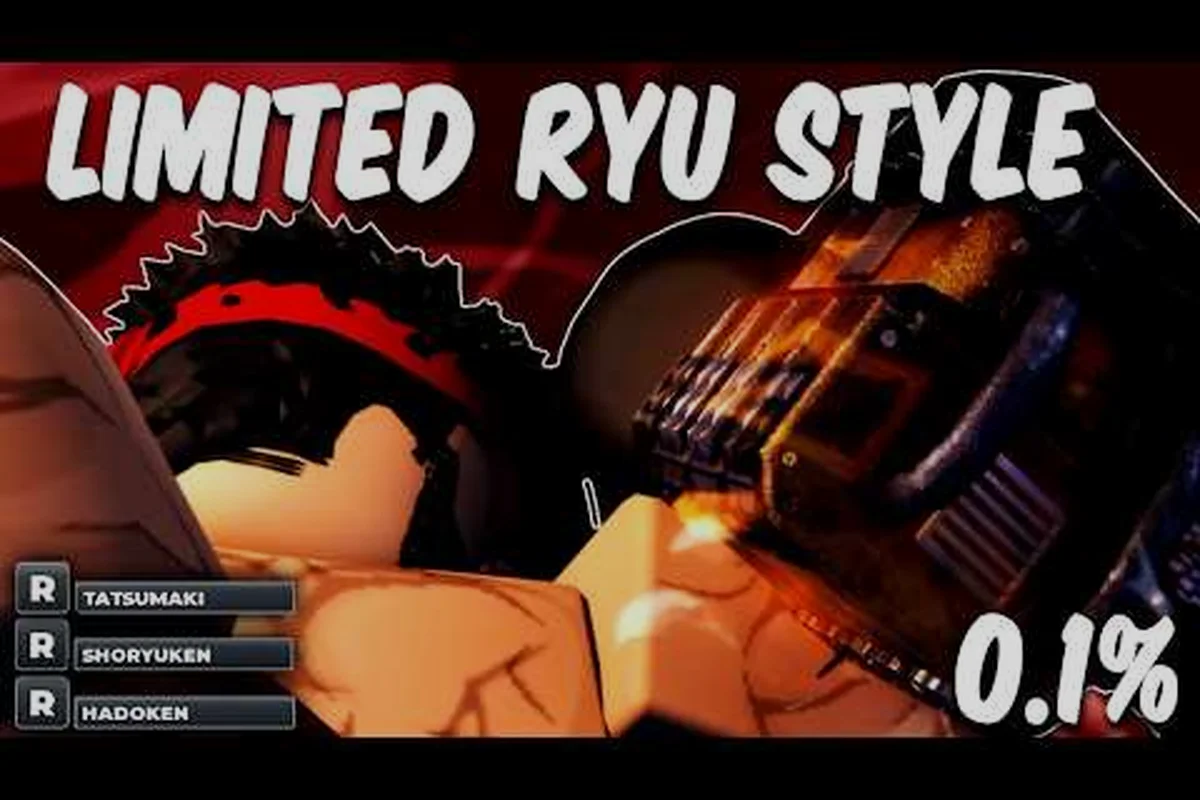
The October Street Fighter 6 crossover for Untitled Boxing Game dropped a limited-time Ryu style that immediately reshaped the meta, because the Hadoken pressure and closing-frame punishes reward a completely different tempo than the base boxing kits. This guide breaks down the ubg street fighter update october mechanics, compares Ryu against top styles, and examines what the teased second fighter could mean for the next collab wave.
According to the official Roblox game page for STREET FIGHTER 6 x UBG, the October update’s balance changes and character adjustments are documented directly in the experience’s update notes.
What the October Street Fighter Update Actually Changed
The ubg street fighter update october introduced a time-limited Ryu style alongside a new event structure, and the official Roblox page confirms the core loop remains PVP boxing where every style stays viable while rarer kits simply look cooler. The crossover content arrived as a limited-time unlock rather than a permanent roster addition, which means players who missed the window may need to wait for a rerun or a future collab rotation.
The update's most significant mechanical shift comes from how Ryu's kit interacts with the existing dash and block system. PC controls keep Space for dash, F for block, M1 for light punch, M2 for heavy punch, and M2 plus M1 for feint, while Xbox players use A for dash, B for block, X for light punch, Y for heavy punch, RB for ultimate, and LB for equip. What makes Ryu feel different is not a control remap but the frame data attached to his specials, because the Hadoken travels as a projectile that forces opponents to commit to a block or a dash-cancel rather than trading in the pocket.
Community testing from the first week of the event suggests that Ryu's closing frames on blocked specials are tighter than most base styles, which means a well-timed punish window opens after every blocked fireball. This creates a distinct rhythm that rewards players who understand spacing and frame advantage instead of raw aggression.
| Update Element | What Changed | Player Impact |
|---|---|---|
| Ryu Style | Limited-time unlock with Hadoken and Shoryuken specials | New zoning and anti-air options |
| Event Window | Time-limited availability tied to the October collab | Urgency to unlock before rotation |
| Frame Data | Tighter closing frames on blocked specials | More punish opportunities for skilled players |
| Controls | No remap; existing dash, block, and feint inputs retained | Low barrier to entry for veterans |
| Viability | All styles remain viable per official page | No forced meta shift for casual play |
The event structure itself follows the pattern established by earlier UBG limited drops, where the new style appears as a rare pull or a quest reward rather than a guaranteed unlock. Players who want the full Ryu style guide should note that the unlock method and rarity tier affect how quickly the kit can be acquired during the window.
Ryu Style Versus Other Top UBG Styles
Comparing ryu style vs other styles ubg requires looking at three axes: neutral control, punish potential, and defensive flexibility. Base boxing styles like Hitman and Counter rely on in-fighting and timing-based reversals, while Ryu introduces a projectile that changes the spacing game entirely. The Hadoken forces opponents to approach or block, which gives Ryu players a tool that no pure boxing kit can replicate.
The tradeoff is that Ryu's close-range options feel less oppressive than dedicated rushdown styles, because the Shoryuken anti-air works best as a read rather than a reaction. Players who main aggressive styles may find the transition awkward, while defensive players will appreciate the extra layer of zoning.
| Style | Neutral Strength | Punish Potential | Defensive Flexibility | Learning Curve |
|---|---|---|---|---|
| Ryu | High (projectile zoning) | High on blocked specials | Moderate (anti-air option) | Moderate |
| Hitman | Moderate (range pokes) | High on whiff punishes | Low (committal pokes) | Low |
| Counter | Low (reactive) | Very high on successful reads | High (built-in reversal) | High |
| Ippo | Moderate (pressure) | High in the pocket | Low (linear approach) | Moderate |
| Basic | Low (fundamentals) | Moderate | Moderate | Low |
The ubg street fighter event guide angle matters here because the limited window means players need to decide quickly whether Ryu fits their existing playstyle. Community reports indicate that Ryu performs best against slow, linear approaches and struggles against styles that can dash-cancel through the fireball and close distance before the recovery frames end.
How Ryu's Frame Data Shifts the Matchup Spread
Ryu's specials carry distinct startup and recovery properties that differ from standard punches, and understanding these numbers is the key to winning trades. The Hadoken has a slower startup than a jab but travels full-screen, which means it controls space at ranges where most styles have no answer. The Shoryuken, by contrast, is a fast anti-air that leaves Ryu vulnerable if blocked or whiffed.
Players who labbed the second new style UBG Street Fighter content during the first week found that Ryu's closing frames on a blocked Hadoken are punishable by dash-in light punch from most styles, but only if the defender reacts within the first few frames. This creates a skill check that separates casual event participants from players who actually optimize the kit.
The matchup spread shifts most dramatically against styles that lack a fast gap-closer, because those kits must eat multiple fireballs before reaching Ryu's effective range. Styles with strong dash-cancel options can bypass the zoning layer and force Ryu into the exact close-range scramble he wants to avoid.
Event Guide: Unlocking Ryu and Maximizing the Window
The ubg street fighter event guide starts with the unlock condition, which community data suggests is tied to either a rare style roll or a specific event quest chain. The official Roblox page lists the code "street" as an active redemption, but the Ryu style itself appears to come from the limited-time content pool rather than a direct code claim. Players should prioritize event participation during the window because the style rotates out when the collab ends.
The most efficient approach is to grind matches during peak hours when the event queue is fastest, because the unlock rate appears tied to match completions rather than wins alone. Losing a match still progresses the event track, which means even players who struggle against Ryu mirrors can eventually unlock the kit through volume.
| Step | Action | Why It Matters |
|---|---|---|
| 1 | Redeem the "street" code | Free event currency or roll |
| 2 | Complete daily event matches | Progresses the unlock track |
| 3 | Focus on match completions over wins | Volume unlocks faster than win rate |
| 4 | Lab Ryu's specials in training | Frame data knowledge wins matches |
| 5 | Decide on a main before the window closes | Limited-time styles rotate out |
The event also introduces a surprise style element that players have been speculating about since the first teaser, and the community is split on whether this refers to a hidden second fighter or a variant of Ryu himself. The SF6 x UBG update coverage from the release window suggests the developer intentionally left the second slot ambiguous to drive engagement through the event's second half.
What the Teased Second Fighter Could Be
The biggest open question in the ubg street fighter update october is the identity of the second collab fighter, because the official material only confirms Ryu while hinting at more content. The phrase what is the second street fighter style ubg has become a common search because players want to know whether to save event currency or spend it on Ryu immediately.
Community speculation centers on three candidates: Ken as a rushdown variant of Ryu, Chun-Li as a speed-focused kickboxer, or Akuma as a high-risk glass cannon. Each option would fill a different niche in the existing roster, and the developer's history of balancing rare styles around distinct identities suggests the second fighter will not simply be a Ryu clone.
The ubg street fighter surprise style phrasing from the event teaser implies the reveal will happen mid-event rather than at launch, which mirrors how previous UBG collabs staggered their content drops. Players who want to prepare should hold a reserve of event currency until the second fighter is confirmed, because spending everything on Ryu day one could leave them empty-handed if the surprise style becomes the stronger meta pick.
Predicting the Next UBG Street Fighter Collab Wave
The question of ubg next collab street fighter extends beyond the current event, because the Street Fighter 6 partnership opens the door for a recurring content pipeline rather than a one-off drop. The developer's solo-dev structure means content arrives in focused bursts, and the success of the Ryu window will likely determine whether Capcom approves additional fighters for future waves.
The most likely scenario is a second wave featuring Ken as a direct counterpart to Ryu, because the two characters share animation rigs and special move templates that reduce development time. A more ambitious wave could introduce Chun-Li or Guile as zoning-focused kits that expand the style roster beyond the current boxing archetypes.
| Collab Wave | Likely Fighters | Development Cost | Meta Impact |
|---|---|---|---|
| Wave 1 (Current) | Ryu | Baseline | Zoning + anti-air |
| Wave 2 (Speculated) | Ken or Chun-Li | Low (shared rigs) | Rushdown or speed |
| Wave 3 (Speculated) | Akuma or M. Bison | High (new assets) | Glass cannon or control |
| Wave 4 (Speculated) | Guile or Cammy | Moderate | Defensive zoning or rushdown |
The next style in Untitled Boxing Game conversation has shifted since the collab announcement, because the Street Fighter kits introduce mechanics that base boxing styles cannot replicate. This creates pressure on the developer to either buff existing styles or accept that collab fighters will dominate the meta during their event windows.
How the Collab Affects Long-Term Style Balance
The introduction of projectile-based specials creates a fundamental imbalance with pure boxing styles, because no base kit has an answer to full-screen zoning. The official page's claim that all styles remain viable holds true in casual play, but competitive players have already noted that Ryu's kit forces specific counterplay that some styles simply cannot execute.
The UBG style buffs discussion has intensified since the collab dropped, with players calling for dash-cancel buffs or projectile-blocking mechanics on existing styles. The developer has not announced any balance changes as of the October update, but the community expects adjustments before the next collab wave to prevent the Street Fighter kits from becoming mandatory picks.
The long-term health of the game depends on whether collab content integrates with the existing style ecosystem or exists as a separate power tier. Players who invest in base styles need reassurance that their kits will receive compensation buffs, while collab hunters want the limited-time fighters to feel special without invalidating everything else.
What the October Update Means for Your Climb
The ubg street fighter update october rewards players who adapt quickly, because the Ryu window creates a temporary meta where projectile zoning and frame-tight punishes dominate. Players who lab the Hadoken spacing and Shoryuken anti-air timing will climb faster than those who try to force their existing rushdown habits into a matchup that punishes linear approaches.
The event's limited-time nature means the optimal strategy is to unlock Ryu early, lab the kit extensively, and decide whether to main it or counter it before the window closes. Players who skip the event entirely risk falling behind in matchup knowledge, because future collab waves will likely build on the mechanics introduced here.
The second fighter reveal will determine whether the Street Fighter collab becomes a recurring content pillar or a one-off experiment, and the community's response to the ubg street fighter surprise style will shape the developer's roadmap for 2027. For now, the Ryu window is the clearest signal yet that UBG is willing to import fighting-game mechanics into its boxing framework, and the results have been divisive but undeniably engaging.
Frequently Asked Questions
How do I unlock the Ryu style in the October UBG Street Fighter update?
The Ryu style comes from the limited-time event pool rather than a direct code redemption. Community reports indicate that match completions progress the unlock track, so grinding event matches during the window is the most reliable method. The "street" code provides event currency but does not directly grant the style.
Is Ryu style better than Hitman or Counter in UBG?
Ryu excels at zoning and anti-air punishes, while Hitman wins through range pokes and Counter through reactive reversals. Ryu beats slow linear approaches but struggles against dash-cancel rushdown. The best style depends on your spacing awareness and frame-data knowledge rather than raw tier placement.
What is the second Street Fighter style coming to UBG?
The developer has not confirmed the second fighter, but community speculation centers on Ken as a rushdown variant, Chun-Li as a speed-focused kickboxer, or Akuma as a high-risk glass cannon. The reveal is expected mid-event rather than at launch, so holding event currency is a reasonable hedge.
Will the Street Fighter collab return after October?
No official rerun has been announced, but the success of the Ryu window will likely determine whether Capcom approves additional waves. Limited-time UBG styles have historically rotated back during anniversary events, so a future return is plausible but not guaranteed.
Does Ryu's Hadoken work against every UBG style?
The Hadoken forces every style to block or dash-cancel, but styles with fast gap-closers can punish the recovery frames. Slow styles must eat multiple fireballs before closing distance, which makes the matchup heavily Ryu-favored. Learning the dash-cancel timing is essential for counterplay.